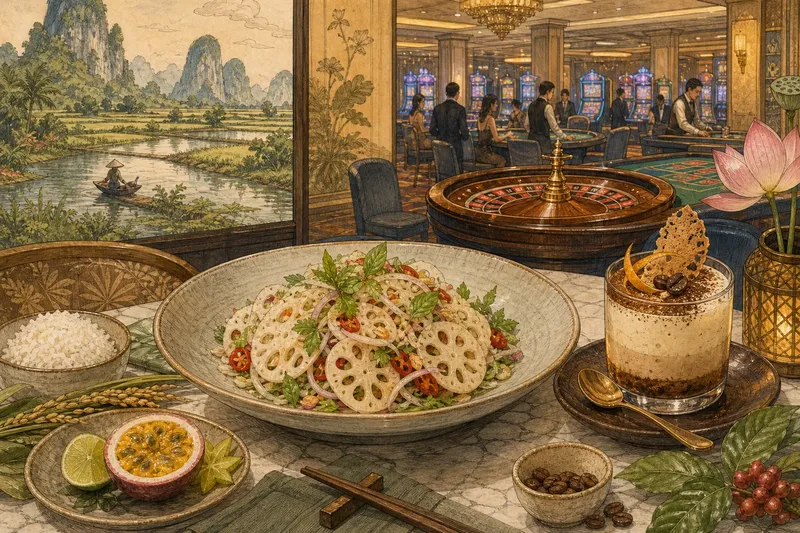
A Casino-Themed Harvest Table, Planned Without the Guesswork
Plan a casino-themed harvest table around one familiar seasonal ingredient, with a manageable menu and crop details that invite conversation, not luck claims.
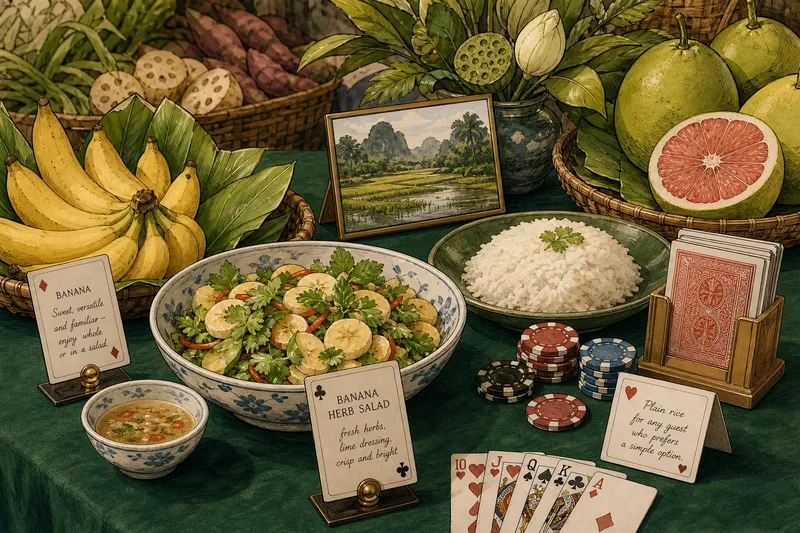
At a Vietnamese market, a basket of pomelos can catch the eye before you have decided what to cook. For a casino-themed harvest table, that familiar crop makes a better starting point than a complicated display: its colour and flavour can guide the menu, while a few card-room details set the mood.
Choose a market crop
Pick an ingredient guests can recognise and you can serve comfortably. Depending on what is in season and available locally, that might be pomelo, banana, sweet potato, lotus root or rice. Ask a greengrocer what is in good condition, then choose dishes that suit the ingredient rather than chasing an unusual crop for decoration.
Keep the crop’s role clear. Pomelo segments can sit beside a savoury salad; rice can anchor a meal; banana can be offered whole or sliced. If you want to mention a growing region or culinary tradition, use a detail you know to be accurate and specific to the ingredient at hand.
Shape a simple menu
Plan for the gathering, not for the theme’s sake. A shared meal might centre on rice with vegetables and a crop-led side; a brief visit may suit fruit and a few savoury bites. Include a plain option for guests who prefer familiar food, and ask about dietary needs before deciding on the dishes.
Vary texture and flavour instead of repeating one ingredient in every course. Soft, sweet banana might be paired with a crisp herb salad; a rice-centred menu can gain contrast from vegetables or sauces. Keep preparation manageable, especially if several dishes need attention just before guests arrive.
Imagine you find ripe bananas at a market and expect six friends for an informal visit. You set aside six whole bananas for guests who want plain fruit, slice two more into a herb salad, and put the salad dressing in a separate bowl. The visible result is a clear banana theme with an unseasoned option; if the salad quantity seems more than your guests want, you can serve it in a smaller bowl and leave the remaining slices separate.
Give the crop context
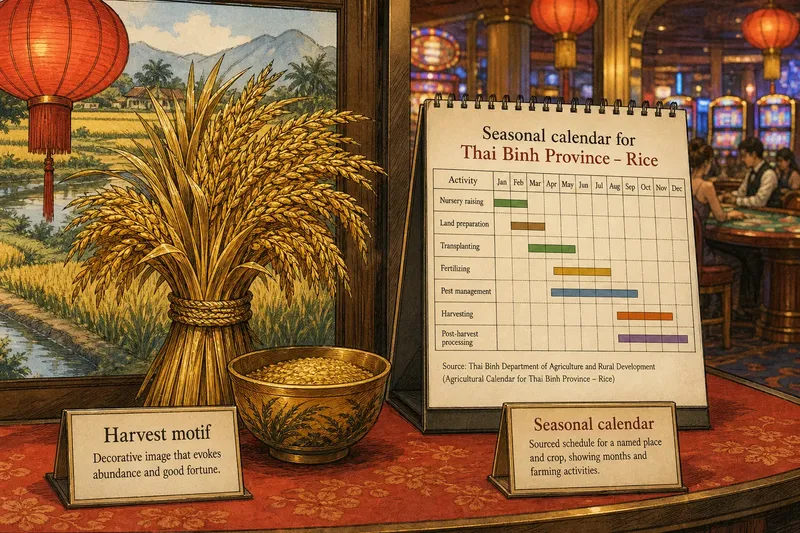
A small dish card can name the crop and describe its place in the meal: “Pomelo segments with herbs” tells guests what they are seeing without turning a food tradition into a promise. A photograph of a market basket, garden or rice-growing landscape can add a visual cue. If a motif has a particular meaning in a community, check its context with someone familiar with it rather than presenting one interpretation as universal.
For the casino styling, use a green cloth, playing-card-shaped place cards or a deck held upright in a menu stand. Keep the cards away from food and serving areas. A crop’s leaves should be identified clearly if they are decorative, so no one mistakes them for edible ingredients.
Which details make hosting easier?
Which ingredient should anchor the table?
Choose a crop that a nearby market can supply in good condition and that you know how to serve. If it is hard to find or awkward to prepare, switch to a more familiar ingredient before planning the menu.
How should I plan the amount of food?
Start with the kind of gathering and the dishes you intend to serve, then ask guests about dietary needs. If a dish is unfamiliar or its quantity is uncertain, offer it alongside a plain alternative and keep additional food separate until needed.
Can cards decorate the food display?
Use cards as place cards or menu signs, held in a clean stand and set away from serving dishes. If you cannot keep them clear of food and utensils, leave them off the display.
How do I describe a crop without implying luck?
Name the ingredient and explain its actual culinary or landscape connection. If a description turns into a claim that the crop brings fortune, replace it with a concrete account of its flavour, preparation or origin.
Check the table before shopping
Use this quick list to turn the idea into decisions. Each observation points to a practical next move:
- Check whether the chosen crop is available in good condition at a nearby market; if it is, build the menu around it, and if not, choose a crop the seller can supply.
- Check whether you can prepare the crop in the form you have planned; if you can, keep that dish, and if not, choose a simpler preparation or another ingredient.
- Check whether the menu includes a plain option; if it does, keep it available, and if not, add a familiar dish or serve part of the crop unseasoned.
- Check whether guests have told you about dietary needs; if they have, account for them in the menu, and if not, ask before shopping or prepare a clear alternative.
- Check whether the crop’s growing-region or cultural note is specific and verified; if it is, use it on a small card, and if not, describe only the ingredient and how it is served.
- Check whether decorative cards and leaves are clearly separated from food; if they are, keep them as accents, and if not, move them to a stand or remove them.
- Check whether any dish needs last-minute preparation; if it does, simplify or prepare suitable elements ahead, and if not, set out the serving equipment before guests arrive.
Label unfamiliar dishes plainly, keep serving spoons ready and follow relevant food-label information and supplier handling guidance. For a casino-themed harvest table, the most useful finishing touch is often a clear dish card: it helps guests choose what to eat and gives the crop room to speak for itself.